WHAT WE DO IN AFGHANISTAN
Humanitarian assistance
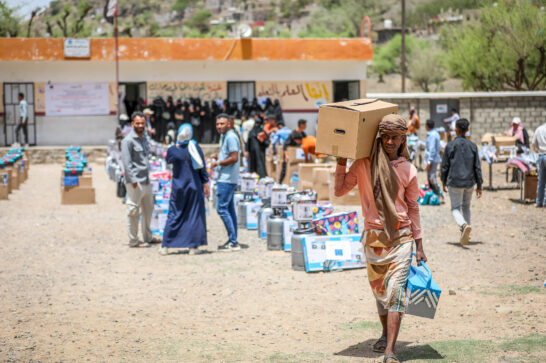
Cordaid Afghanistan delivers multi-sector humanitarian and early recovery assistance to some of the country’s most vulnerable people; those affected by conflict, natural disaster, or both.
Operating through a well-established humanitarian unit and a strong network of local partners, Cordaid provides timely support across water and sanitation, emergency shelter and non-food items, and food security and livelihoods. The team is equipped to respond to acute crises within 48 hours.
Underpinning this work is a firm commitment to localisation. Cordaid Afghanistan is moving away from a traditional project-based partnership model towards genuine strategic alliances with local partners, sharing risks and rewards, and building the long-term relationships needed to create lasting social change.
Women’s economic empowerment
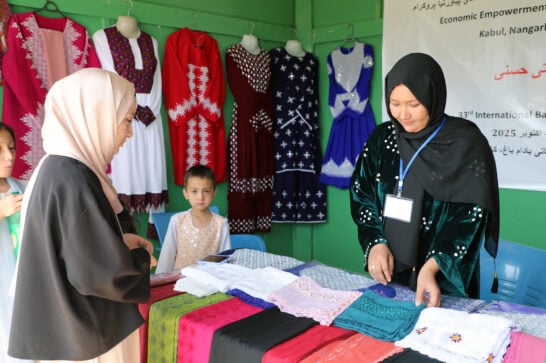
With access to employment and education severely restricted, Afghan women increasingly rely on home-based and community-based livelihoods to support their households. Cordaid Afghanistan’s Women’s Economic Empowerment (WEE) programme addresses this by promoting sustainable, locally-led economic opportunities for vulnerable women, with a focus on financial inclusion, market access, and culturally sensitive delivery.
The programme supports small business development and entrepreneurship, financial literacy and savings groups, market linkages and value chain development, and skills training and mentoring. In line with Cordaid’s localisation commitments, all interventions are implemented in close collaboration with national partners and community structures, with sustainability and local ownership built in from the outset.
Mental healthcare, psychosocial support, and physical rehabilitation
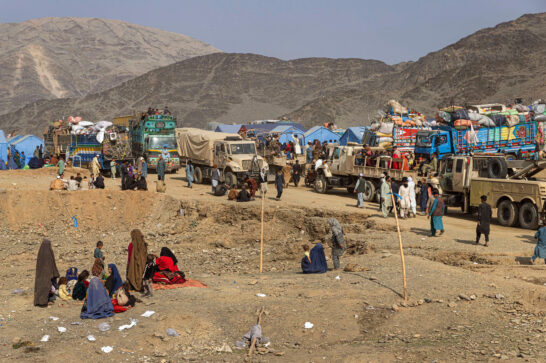
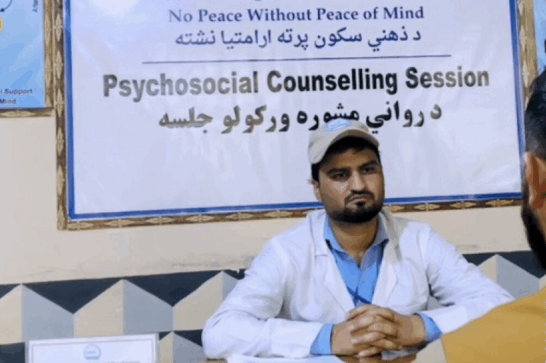
Afghanistan is grappling with a largely invisible but severe mental health crisis, driven by prolonged displacement, poverty, and the mass return of people from neighbouring countries.
The Afghanistan Humanitarian Fund’s 2025 annual report points to growing needs and declining funding, with psychosocial support among the most critically underfunded areas of the humanitarian response.
Physical rehabilitation needs are equally acute. Decades of conflict, landmine contamination, road traffic injuries, polio, and a fragile health system have left an estimated two to three million Afghans with significant disabilities requiring sustained rehabilitation.
Access to specialist services remains severely limited, particularly in rural and conflict-affected areas, and has been further eroded by cuts to health funding. Women and girls with disabilities face the greatest barriers, compounded by mobility restrictions, sociocultural norms, and a shortage of female health workers.
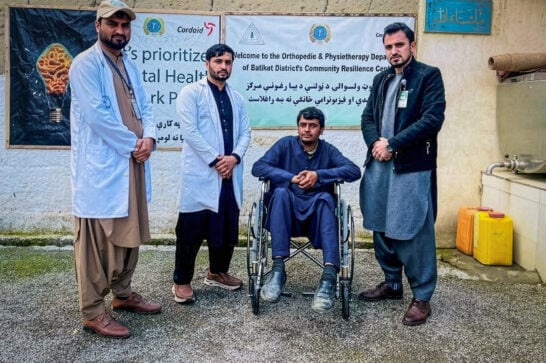
Through a consortium-based integrated health programme, Cordaid provides community-based mental health, psychosocial support, and physical rehabilitation services via Community Resilience Centres. The programme offers tailored support to women, girls, and other vulnerable groups, responds to the needs of both returnees and host communities, and works to strengthen local capacity to sustain these services over time.
Afghanistan Joint Response of the Dutch Relief Alliance
As a member of the Dutch Relief Alliance, we lead a joint emergency response in the provinces of Herat, Kandahar and Nangarhar. The response addresses people’s needs by providing cash, food, water, sanitation and access to health care. The partners aim to reach more than 170.000 Afghans through their activities. In response to the earthquake in Herat in October 2023, the partners of the Dutch Relief Alliance reached 72,025 survivors with various humanitarian activities.
WHERE WE WORK IN AFGHANISTAN
We are active in a significant part of the country, delivering humanitarian assistance to people in the cities and provinces of Kabul, Herat, Khost, Nangarhar, Daikundi, Bamyan, Mazar, Takhar, and Samangan.
PARTNERS AND DONORS
Members and partners of the Dutch Relief Alliance, UN agencies, the European Union, the Dutch Ministry of Foreign Affairs, the Afghanistan Humanitarian Fund, the German Federal Foreign Office, the Global Start Fund Network and the World Bank.
CONTACT
Address
Street 6,
Qala-i-Fathullah
Kabul
Afghanistan
Email
[email protected]